
My Child Woke Up With a Red Ring on Her Arm—What Could It Mean?
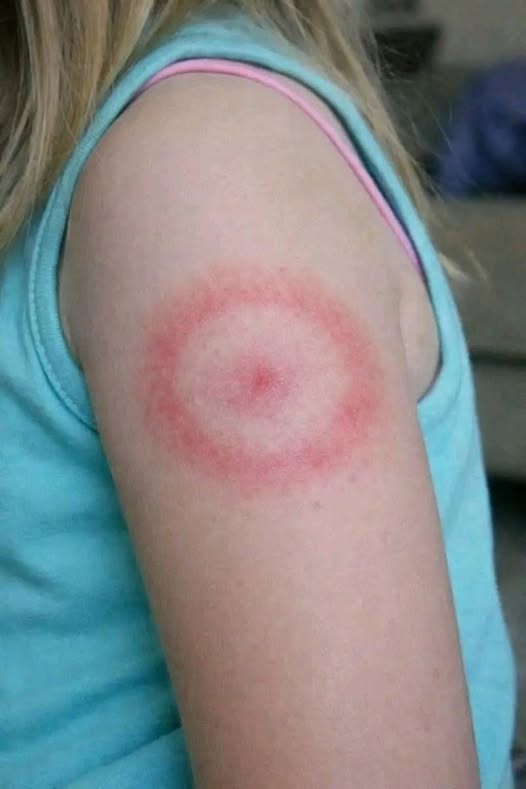
You notice a strange red circle on your child’s arm one morning. It wasn’t there yesterday—or at least you don’t remember seeing it. The center looks lighter, the outer edge is red, and you could swear the spot is getting larger.
For many parents, the first reaction is worry.
A ring-shaped rash can have several causes, ranging from common fungal infections to reactions from insect bites. In some situations, an expanding circular rash can also be associated with Lyme disease.
The appearance of the rash alone usually isn’t enough to determine the cause, so knowing what details to watch for can help you decide what to do next.
Important: This information is educational and is not a substitute for an examination or diagnosis by a healthcare professional.
Start by Looking Closely at the Rash
Before applying creams or trying home remedies, take a good look at the area.
Pay attention to:
- How large the rash is
- Whether it is getting bigger
- Whether the border is raised or scaly
- Whether the center looks clearer than the outside
- Whether it feels warm
- Whether your child says it itches or hurts
- Whether additional spots are appearing
- Whether your child has a fever, headache, fatigue, or other symptoms
Taking a clear photograph with a ruler or another size reference next to the rash can also make it easier to tell whether it is changing.
If the rash continues to spread or your child becomes unwell, contact their healthcare provider.
Could It Be Lyme Disease?
One condition parents often associate with a circular rash is Lyme disease.
Lyme disease is caused by bacteria transmitted through infected blacklegged ticks. One of its most recognizable signs is an expanding rash called erythema migrans, or EM.
An EM rash may begin near the location of a tick bite and gradually enlarge over several days. It can sometimes develop a target or bull’s-eye appearance, although it does not always look like a perfect bull’s-eye. According to the CDC, the rash may feel warm but is usually not particularly painful or itchy.
The rash can appear several days after an infected tick bite, and people do not necessarily remember seeing or removing a tick.
If your child has an expanding rash and recently spent time around wooded areas, brush, tall grass, or another place where ticks may be present, contact a healthcare professional promptly.
Lyme disease can be treated with antibiotics, and early treatment is important.
Another Common Possibility: Ringworm
Despite its name, ringworm isn’t caused by a worm.
It is a fungal infection of the skin. When it affects the body, it can produce a circular or ring-shaped rash. The affected area may be itchy, slightly raised, or scaly, and the center of the ring may appear clearer than its outer edge.
That texture can sometimes help distinguish it from an erythema migrans rash, although parents should not rely on appearance alone for diagnosis.
Many cases of ringworm on the skin can be treated with antifungal medication, although treatment depends on where the infection is located and how severe it is.
One important caution: the CDC advises against using steroid creams on a rash that might be ringworm because steroids can make fungal infections worse or change their appearance.
It May Be Something Else Entirely
Not every circular rash is Lyme disease or ringworm.
Localized skin reactions can occur after insect bites, exposure to irritating substances, or other common childhood skin conditions.
This is why the overall picture matters.
Ask yourself:
Has your child been outside recently?
Think about hiking, camping, playing in tall grass, parks, wooded backyards, or contact with pets.
Is the spot itchy and scaly?
Those features can occur with fungal infections such as ringworm.
Is it rapidly getting larger?
A noticeably expanding rash is worth discussing with your child’s doctor, particularly if there could have been tick exposure.
Are there other symptoms?
Fever, fatigue, headache, body aches, or changes in your child’s behavior can provide important clues for a clinician.
When Should You Call the Pediatrician?
If your child otherwise seems well but the rash continues to enlarge, changes noticeably, or does not improve, it is reasonable to contact their pediatrician or another healthcare professional.
The American Academy of Pediatrics’ HealthyChildren guidance recommends contacting a doctor when a localized rash spreads, becomes worse, persists, or when the child appears to be getting sicker.
When you call, be ready to explain:
- When you first noticed the rash
- Approximately how large it is
- Whether it has grown
- Whether it itches or hurts
- Whether your child has a fever or feels unwell
- Whether there has been recent outdoor or tick exposure
- Whether your child has recently used new soaps, lotions, clothing, or other products
A photograph showing how the rash has changed over time may also be useful.
When a Rash May Need Emergency Care
A simple circular rash by itself does not necessarily mean an emergency.
However, seek urgent or emergency medical care if a rash appears along with signs of a potentially serious reaction or illness, such as difficulty breathing, swelling involving the face or mouth, severe weakness or altered behavior, widespread blistering or peeling skin, or rapidly developing purple or bruise-like spots without an obvious injury. Pediatric guidance identifies certain rapidly spreading purple or bruise-like rashes and widespread blistering as warning signs requiring immediate evaluation.
If you believe your child is experiencing a medical emergency, contact emergency services.
The Bottom Line
Finding an unexplained red ring on your child’s skin can be unsettling, but several different conditions can produce a similar appearance.
A scaly, itchy, raised ring can point toward a fungal infection such as ringworm, while an expanding rash that is relatively painless and not very itchy, particularly after possible tick exposure, deserves prompt medical evaluation for Lyme disease.
Instead of trying to diagnose the rash from appearance alone, photograph it, monitor how it changes, watch your child’s overall condition, and contact a healthcare professional if it keeps expanding or anything concerns you.
A small amount of careful observation can provide your child’s doctor with valuable information—and help turn an alarming-looking mystery into something that can be properly identified and treated.